

Treatment · 09
Bruxism &
Teeth Grinding
A doctor-led approach to jaw clenching, teeth grinding and masseter tension — and the discomfort they can cause.
About the treatment
Easing tension
and clenching.
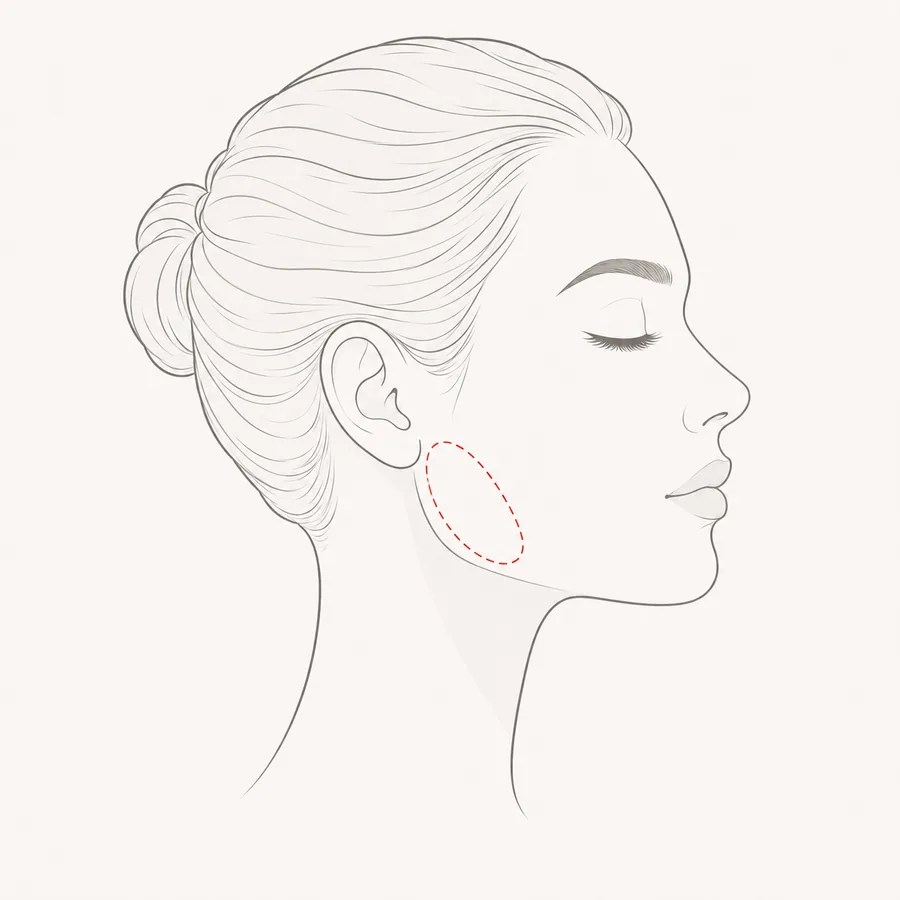
Bruxism is the habit of clenching or grinding the teeth, often during sleep or at times of stress. It works the masseter muscle hard, which can leave the jaw feeling tight, tired or sore.
Symptoms it may help
People seek treatment for a range of related symptoms, including:
- Jaw clenching and teeth grinding
- Aching or tension in the masseter and jaw
- Tenderness on waking, or headaches around the temples
- A jaw that feels tight or easily fatigued
How treatment works
Small injections into the masseter temporarily reduce its activity. As the muscle relaxes over the following weeks, the force of clenching tends to ease, which can relieve tension and associated discomfort.
Medical assessment
Grinding and jaw pain can have several causes. Your symptoms, dental history and any jaw-joint concerns are reviewed, and onward dental or medical assessment may be advised where appropriate — for example, a night guard alongside treatment.
What to expect
Relief develops gradually rather than immediately, and results are reviewed before further treatment is planned. Any softening of the jaw contour is a secondary effect and is discussed with you beforehand.
Good to know
Questions, answered.
How soon might clenching ease?
Relief from clenching and tension develops gradually over several weeks. The expected onset, duration and limitations are discussed during consultation.
Will it change the shape of my face?
The focus here is symptom relief. Some people notice a subtle softening of the jaw over time; if reshaping a wide or square jaw is your main goal, see our Jaw Slimming treatment.
How are risks discussed?
Expected effects, limitations, alternatives and material risks are explained before consent, along with clear aftercare and contact guidance.
Ready when you are
Book your consultation.
Jaw clenching is worth having looked at properly. Start with a conversation about how it is affecting you.